Description
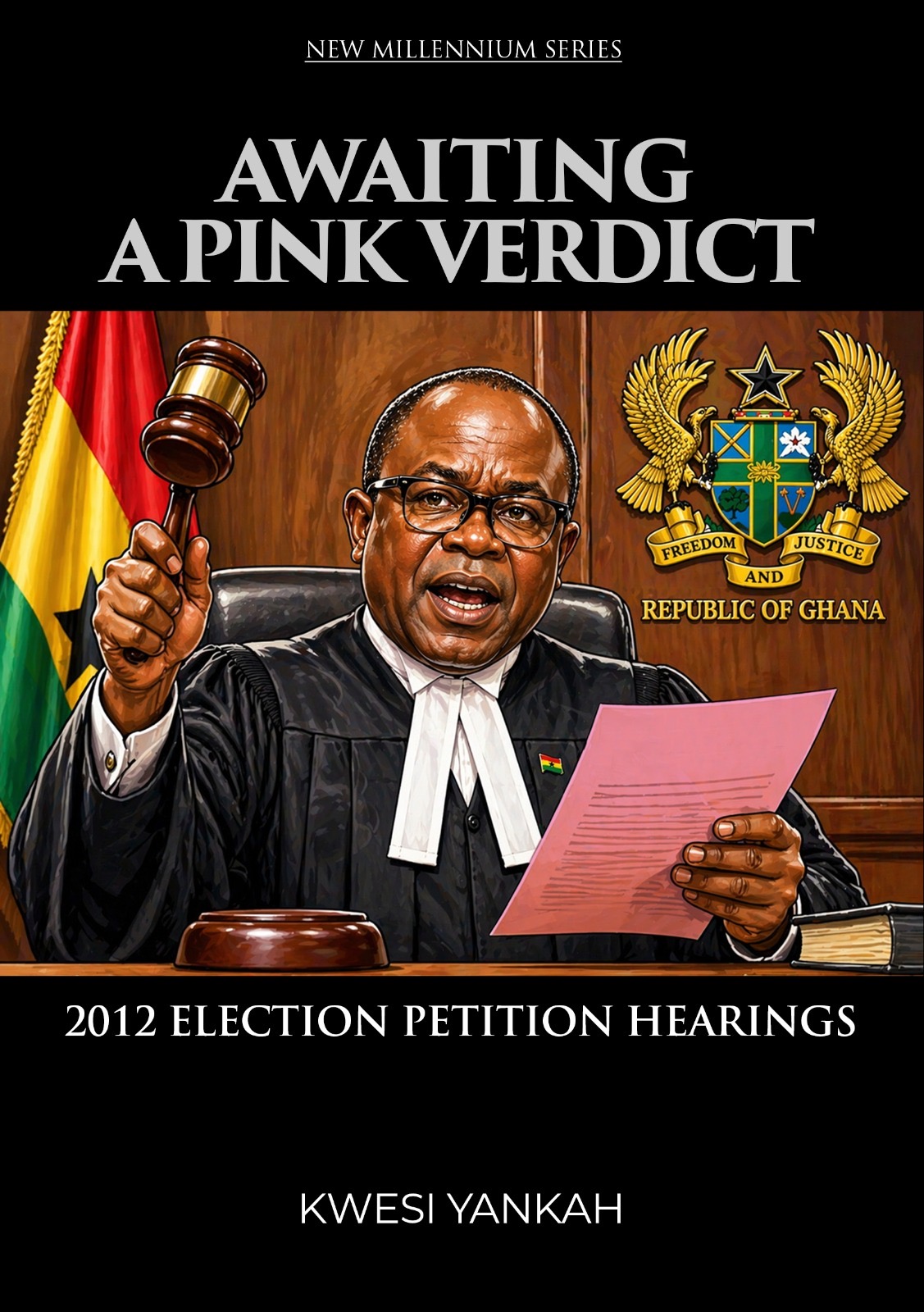
Kwesi Yankah’s Awaiting a Pink Verdict: Election Petition Hearings unfolds like a reflective journey through Ghana’s political, social, and cultural landscape, told in a voice that is at once humorous, critical, and deeply observant. Rather than presenting a single linear story, the book reads as a tapestry of essays—each episode capturing a moment in time, yet collectively revealing the character of a nation navigating democracy, power, and identity.
The narrative opens with vivid travel reflections, such as the author’s experience in Zimbabwe, where economic collapse is portrayed through striking everyday scenes—skyrocketing prices, empty shelves, and the absurdity of currency devaluation. These observations are not merely descriptive; they quietly warn of what mismanagement and policy failure can do to a society. From there, the tone shifts toward Ghana, where Yankah dissects political life with a blend of satire and realism. Presidential convoys become symbols of excess and danger, illustrating how power can distort behavior on even the most ordinary roads. Political aspirants and party delegates are depicted in almost theatrical terms, revealing a system where loyalty, money, and performance often outweigh ideology.
At the emotional core of the book lies the death of President John Atta Mills. Yankah captures the shock that rippled through the country—the hesitation to believe the news, the sudden unity across political divides, and the cultural rituals of mourning that overtook daily life. Yet even in grief, he does not shy away from critique. He reflects on rumors, political opportunism, and the tension between tradition and modern democratic expectations, showing how deeply intertwined emotion and politics are in Ghanaian society.
The centerpiece of the narrative is the election petition hearings—the “pink verdict.” Here, the story becomes almost cinematic. The “pink sheets,” originally mundane electoral documents, transform into powerful national symbols, driving legal battles, public debates, and widespread anxiety. Yankah paints the Supreme Court proceedings as both serious and theatrical: lawyers sparring, witnesses fumbling, judges asserting authority, and the entire nation glued to live broadcasts. The courtroom becomes a stage where democracy itself is tested. Through humor and irony, he highlights the contradictions of free speech—how quickly bold commentators retreat when faced with judicial consequences—and the way public discourse oscillates between courage and caution.
Beyond politics, the narrative broadens into historical reflection. Yankah revisits Ghana’s founding figures—the “Big Six”—and explores their legacies, offering a more personal and human perspective on national heroes. These encounters serve as a reminder that contemporary political struggles are rooted in a longer history of ideas, conflicts, and aspirations.
The later sections shift tone again, embracing the unifying power of sport. The Africa Cup of Nations and the World Cup are depicted as moments when the nation sets aside its divisions. Football becomes a shared language of hope, pride, and collective identity, contrasting sharply with the tensions of political life. The emotional rollercoaster of Ghana’s matches—especially the dramatic World Cup clash with Uruguay—mirrors the highs and lows of the national psyche.
Throughout the book, Yankah’s narrative voice remains consistent: observant, witty, and often ironic. He moves seamlessly between humor and seriousness, using everyday anecdotes to expose deeper truths about governance, culture, and human behavior. The result is a richly textured portrayal of Ghana—not just as a political entity, but as a living, breathing society shaped by its people, its history, and its contradictions.
In essence, the book is less about a single “verdict” and more about the ongoing story of a nation—its struggles with democracy, its moments of unity, and its enduring capacity for reflection and renewal.